Turning Old Family Photos into Stories
August 4, 2026
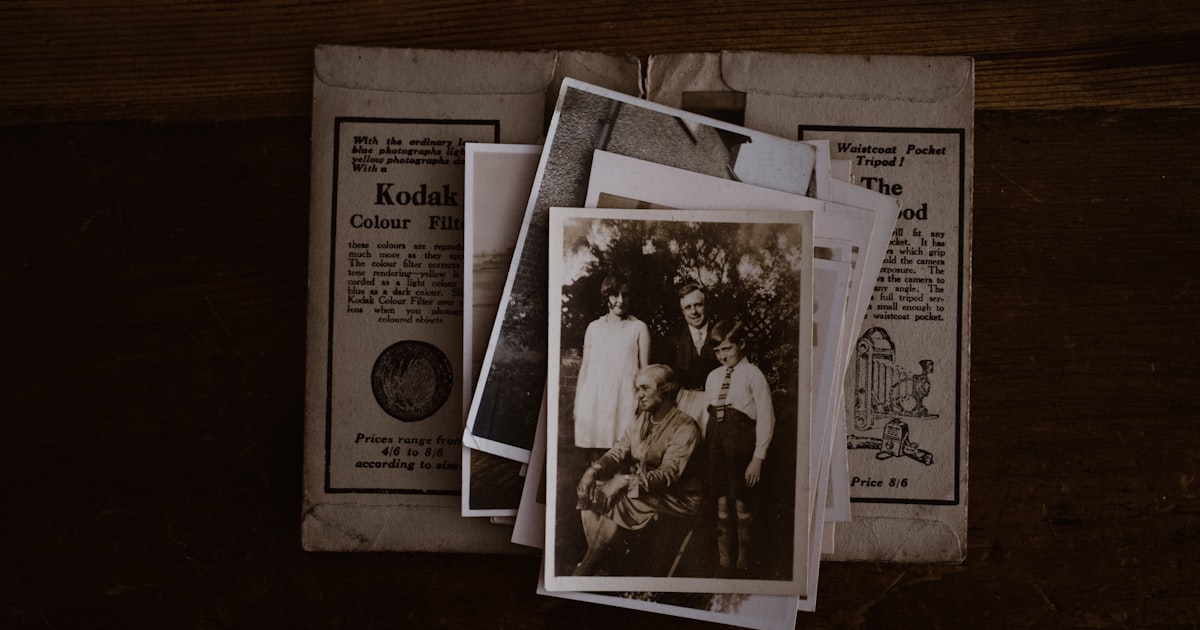
Most families have them: a shoebox, a drawer, or a dusty album full of photographs of people no one can quite name. A photo without its story is only half a memory. The good news is that the stories are usually still recoverable, if you ask the right person soon enough.
Sit down with the oldest person who remembers
Photographs are memory triggers. Spread them out in front of the eldest member of your family and simply start turning them over. One picture reminds them of another story, which reminds them of a third. Do not aim for order. Follow wherever the pictures lead.
Ask the questions a photo cannot answer
For each picture that sparks something, ask:
- Who is in this, and how are they related to us?
- Where and roughly when was it taken?
- What was happening that day?
- What do you remember about the person in it?
- Why was this moment worth a photograph?
Write it on the back, or better, record it
As names and stories come out, capture them right away. Write lightly in pencil on the back of prints, or photograph each picture and record your relative talking about it. A spoken memory holds the warmth that a caption never can.
Digitize before it is too late
Prints fade, and boxes get lost in moves. Scan the photos, or just take a clear picture of each with your phone. As you do, note who is in them. A digitized photo without names is still a mystery in twenty years.
Weave them into a story
Once the pictures have their stories back, you have the makings of a real family history. A handful of photographs, each with the memory behind it, tells more than a hundred unlabeled images ever could.
Family Diary can help here: as an older relative talks through their memories, it gathers their words into an organized life story, and photos can live right alongside the chapters they belong to.
Do not wait for a rainy weekend that never comes. Pull out the box this Sunday, sit with someone who remembers, and let the pictures talk.